
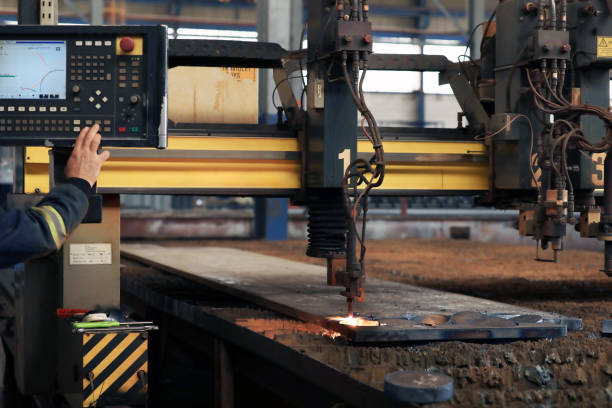

Cutting technology has moved far beyond hand-held tools and basic shop equipment. Across industries, operations demand speed, uniformity, and reliability that manual methods simply cannot guarantee. The rise of automated cutting solutions, especially the CNC plasma cutter, has reshaped how parts are produced for projects of every scale.
Consistent Tolerance Levels Achieved Across Multiple Shifts
Manual cutting often depends on the steadiness of the operator’s hand, which inevitably introduces variation. A CNC plasma cutting machine removes that variable by working with programmed paths that stay identical regardless of the time of day or who is supervising the process. This level of consistency means that identical parts can be made back-to-back without deviation in size or shape.
Consistency across multiple shifts is particularly important for industries where assemblies rely on precise fits. Manual cutters may drift slightly off-line, creating gaps that slow down welding or require additional grinding. By contrast, the repeatability of a CNC plasma cutter guarantees that once the program is set, the results remain uniform shift after shift, maintaining tolerance standards that manual methods cannot reliably achieve.
Streamlined Workflow from Setup to Final Part Completion
Manual tools require frequent adjustments and operator oversight. Setting up a cut can involve marking templates, measuring lines, and double-checking alignments, which slows down production. A CNC machine company programs the instructions once, and those instructions guide the plasma cutter through the entire process without additional input.
This streamlined approach shortens the time between raw material staging and finished component delivery. With integrated design software, the CNC plasma cutting machine can start immediately after the file is loaded, cutting complex patterns that would take hours by hand. The efficiency from setup to final part completion means jobs finish faster, freeing up shop capacity for new orders.
Capability to Handle Varied Alloys Without Tool Changes
Switching materials in manual cutting often requires swapping out tools, changing blades, or resetting angles. That creates downtime and increases the chance of errors. A CNC plasma cutter is designed to handle a wide range of alloys—steel, aluminum, copper, and more—without requiring extensive tool changes.
This adaptability is valuable for facilities that process mixed batches of materials in a single day. Operators can transition from one sheet to another without slowing production. Unlike manual tools, the CNC plasma cutting machine adapts seamlessly, keeping workflows smooth while delivering accurate results across different alloys.
Minimized Scrap Generation Improving Overall Yield
Manual cutting tends to waste material because human error leads to misaligned cuts or misjudged spacing. Over time, those scraps accumulate into significant cost losses. A CNC machine company reduces this problem by programming optimal cutting paths that maximize sheet utilization.
By mapping how each part fits into the material, a CNC plasma cutter cuts with minimal wasted space. That precision reduces scrap, lowers overall material costs, and improves profitability on every batch. The improved yield makes automated cutting systems more sustainable and efficient compared to manual approaches.
Predictable Output Supporting Large Scale Fabrication Schedules
Large fabrication projects run on strict deadlines. Manual cutting introduces unpredictability because output depends on operator speed and fatigue levels. A CNC plasma cutter, once programmed, performs with steady efficiency, producing parts at a predictable rate that helps managers schedule production with confidence.
This predictability is a major benefit for companies that must coordinate multiple processes at once. Downstream operations, such as welding or assembly, rely on timely delivery of components. Knowing exactly when parts will be completed allows production lines to stay balanced, ensuring that large-scale projects finish on schedule.
Controlled Kerf Width Ensuring Uniform Part Dimensions
Kerf width, or the material removed during a cut, is difficult to control consistently with manual methods. Variations in speed or angle can widen or narrow the cut, affecting final dimensions. With a CNC plasma cutting machine, kerf width remains stable because the system regulates cutting speed, arc stability, and positioning.
Uniform kerf control means parts fit together properly during assembly, saving time and reducing rework. Manual cutting often requires secondary adjustments to correct inconsistencies, but automated systems eliminate that problem by maintaining tight dimensional control from the start.
Compatibility with Automation Cells and Material Handling Systems
Manual cutting stations often operate in isolation, with workers moving materials by hand. In contrast, a CNC plasma cutter can integrate into larger automation cells where robotic arms or conveyors handle loading and unloading. This compatibility with automation expands productivity by keeping machines cutting continuously with minimal downtime.
For large shops or facilities aiming for growth, integration with material handling systems is a step toward fully automated manufacturing. A CNC machine company designing these cells allows the plasma cutter to work in tandem with other machinery, creating a streamlined, high-output environment.
Stable Operation Reducing Variability Caused by Human Error
Human fatigue, distractions, and differences in skill level create variability in manual cutting. The stability of a CNC plasma cutter eliminates those inconsistencies by following programmed paths with precision. Operators supervise rather than perform the physical cutting, removing the most common source of variability—human error.
This stability not only improves accuracy but also reduces rework and inspection time. Facilities gain confidence that each cut meets the intended specification. Unlike manual processes, which depend on the best efforts of the operator, automated cutting delivers reliable results every time the machine starts.